The Story
Arbutus menziesii
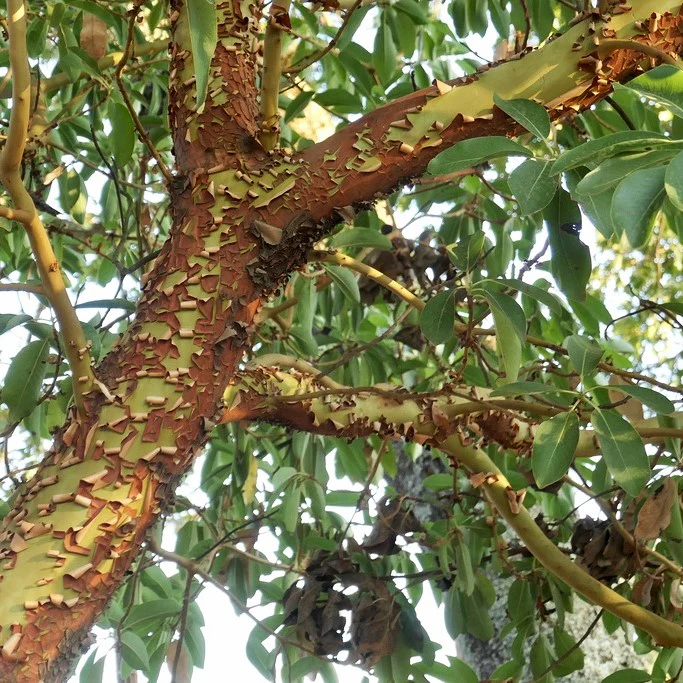
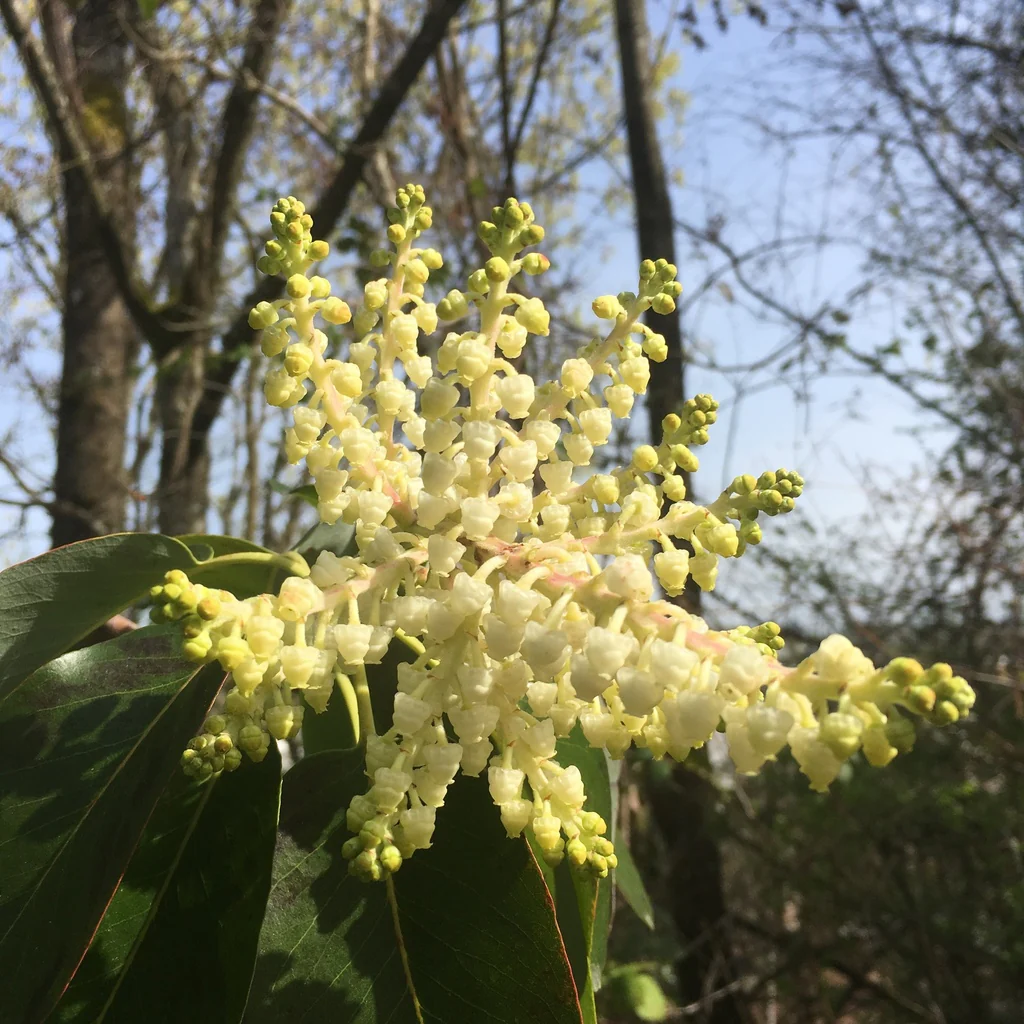
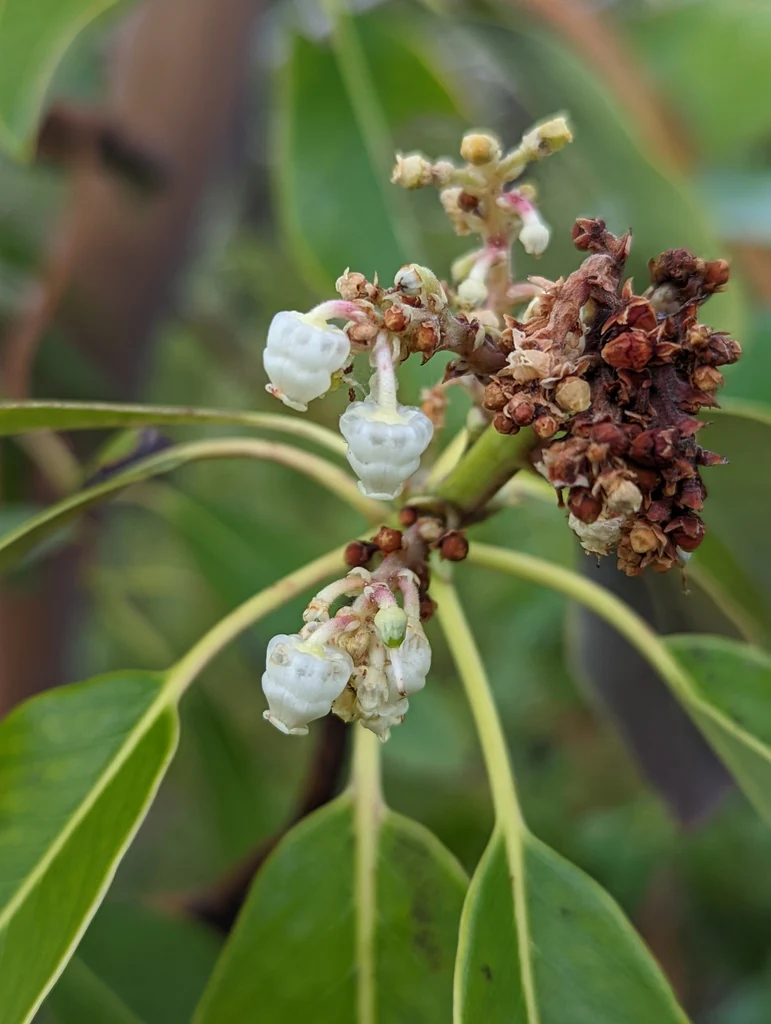
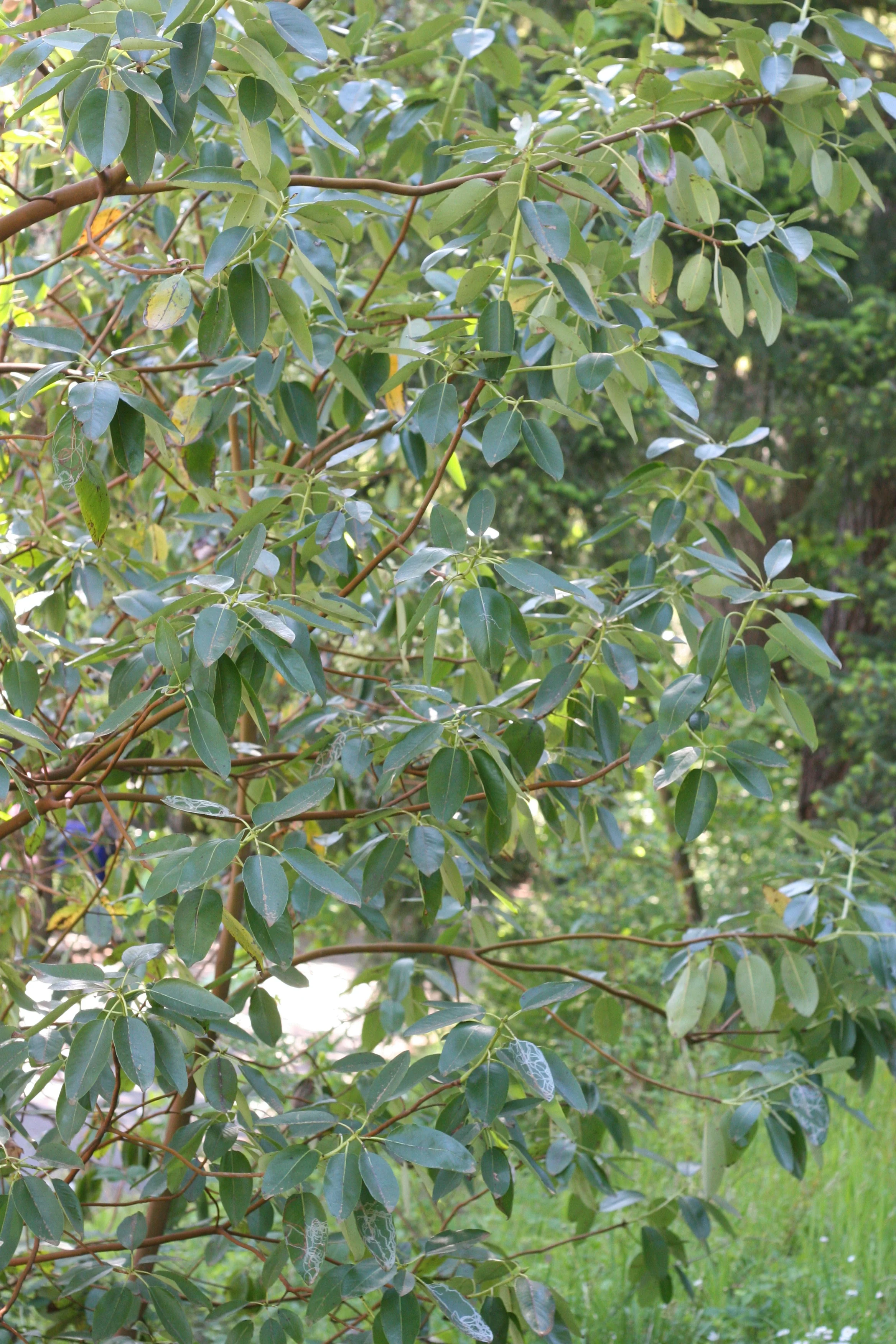
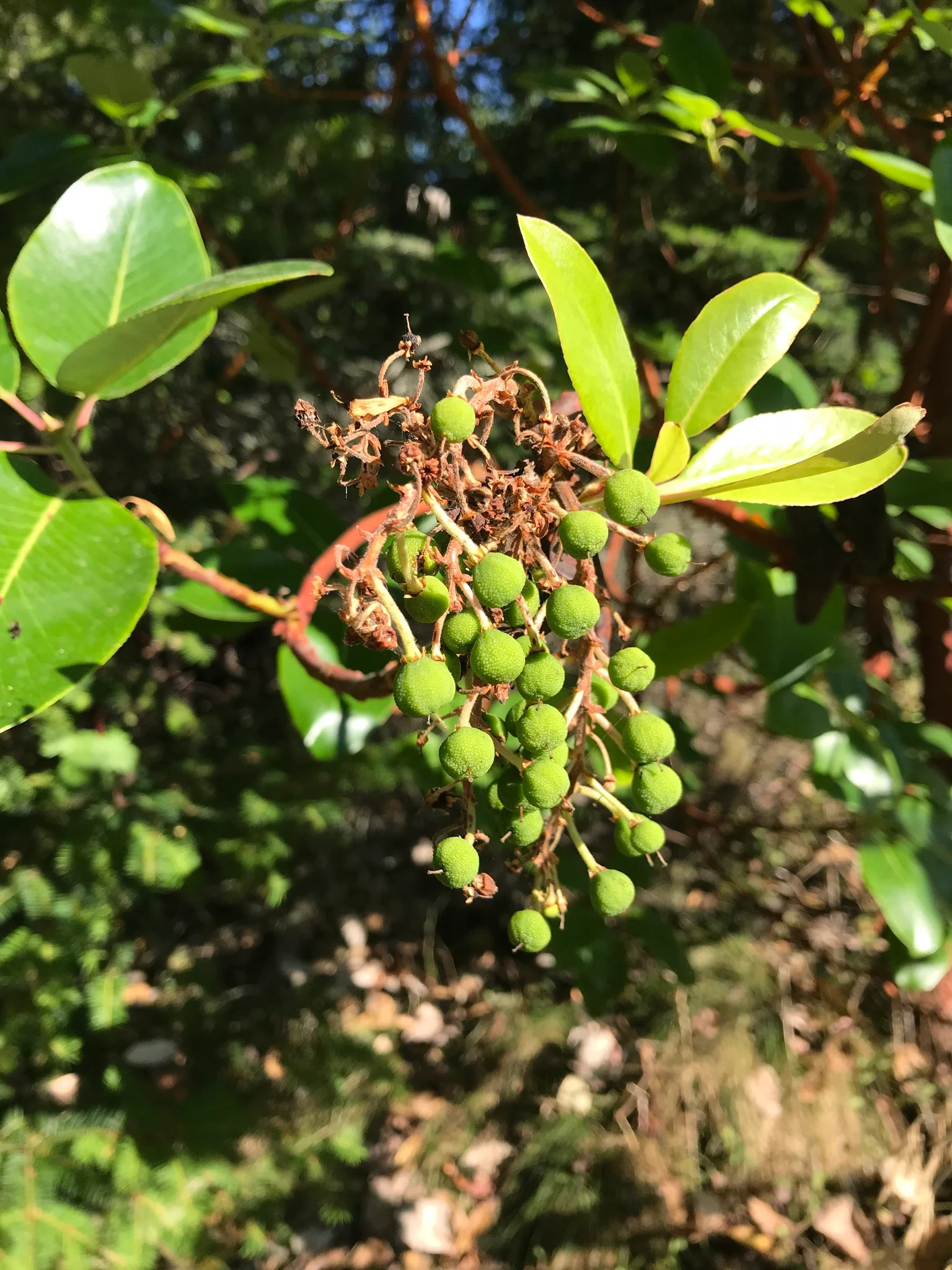
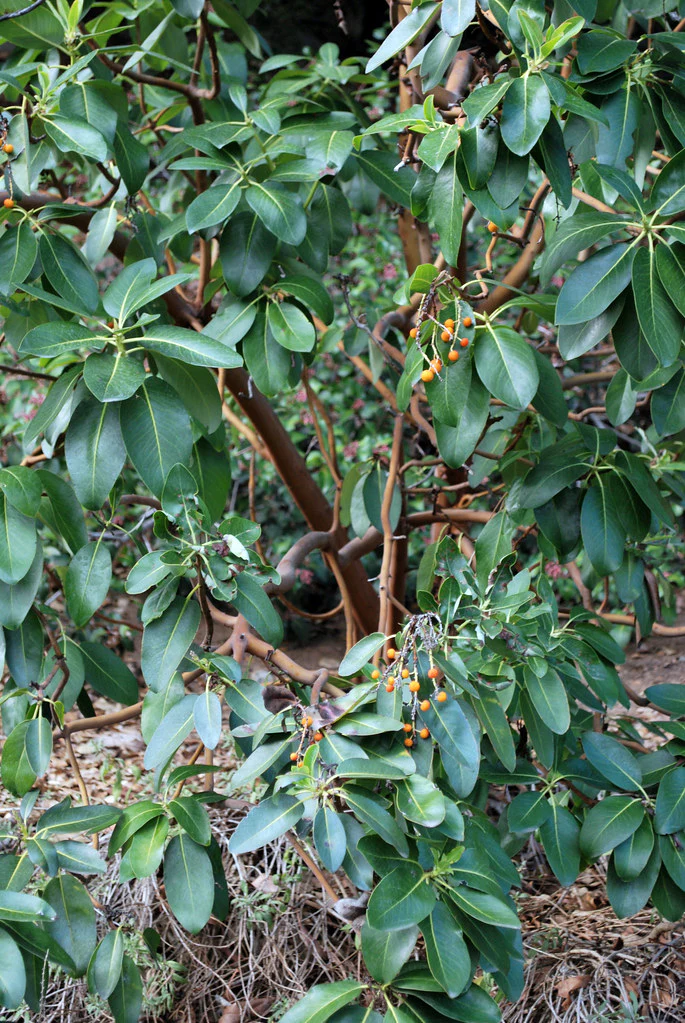
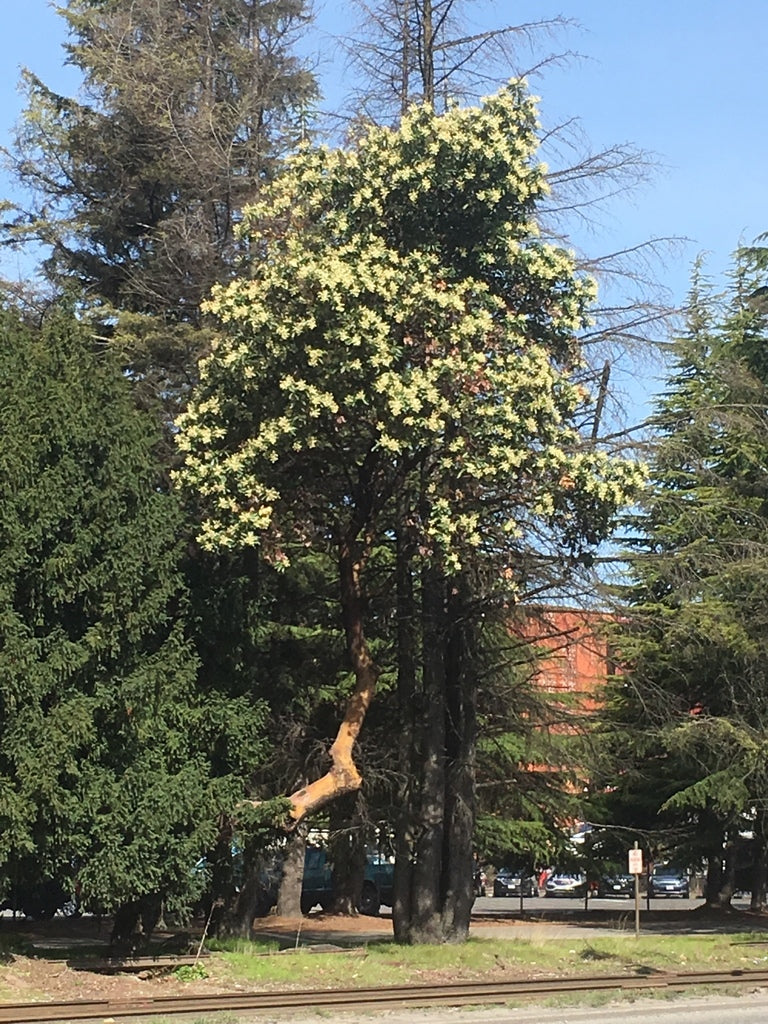
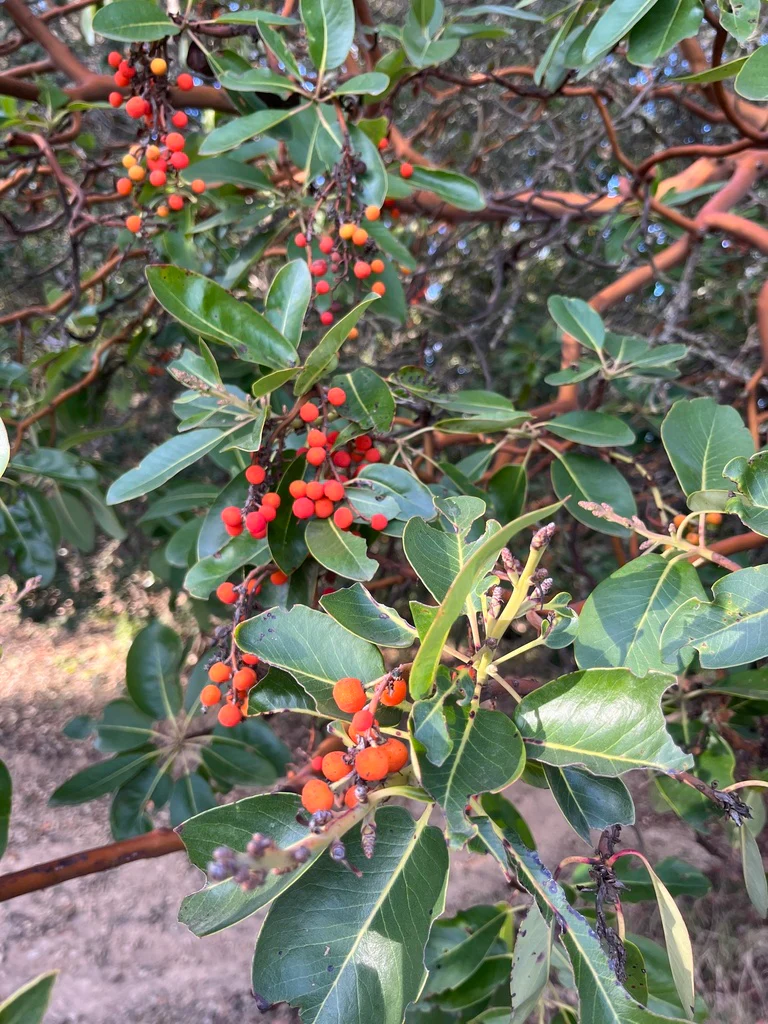
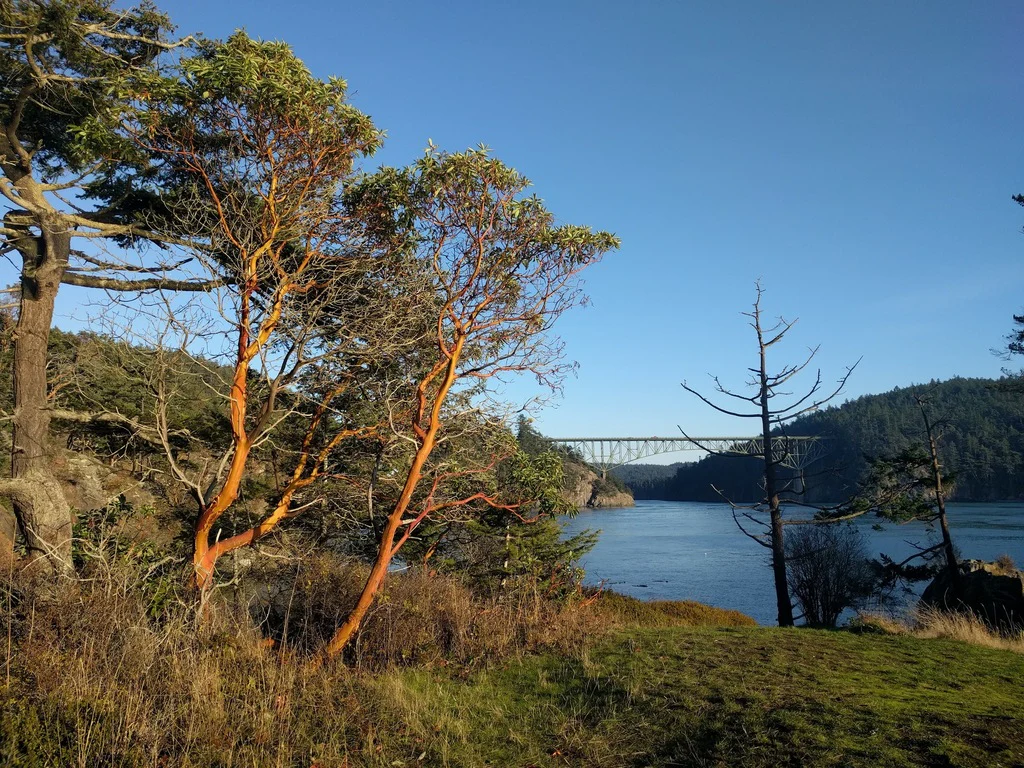
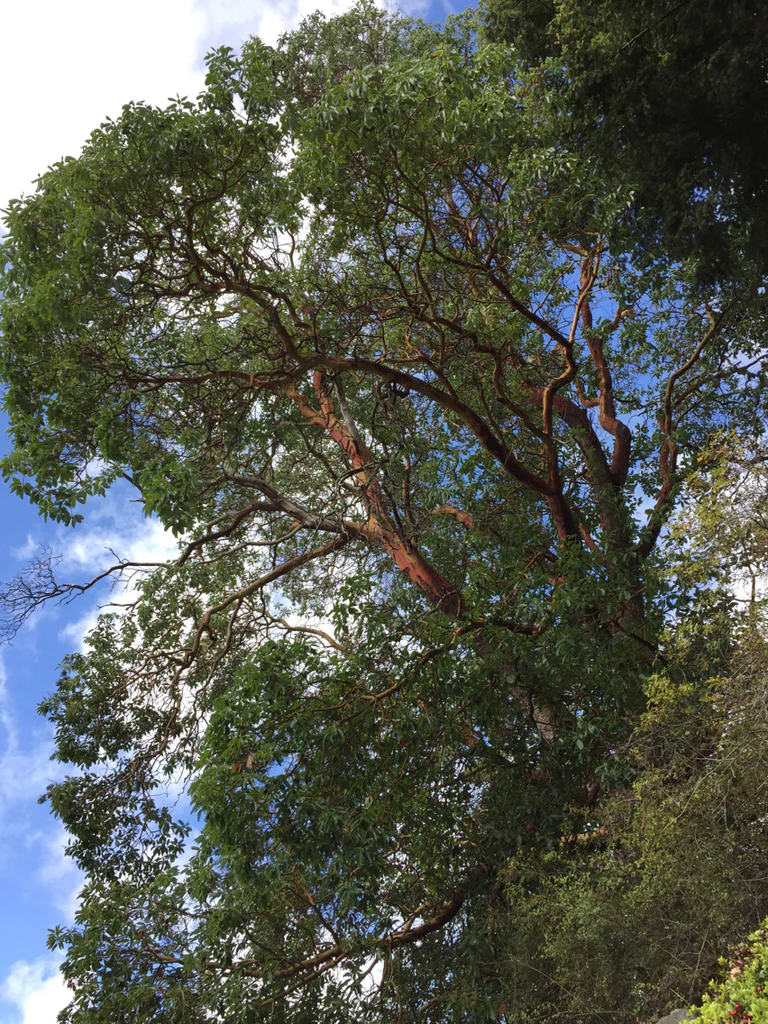
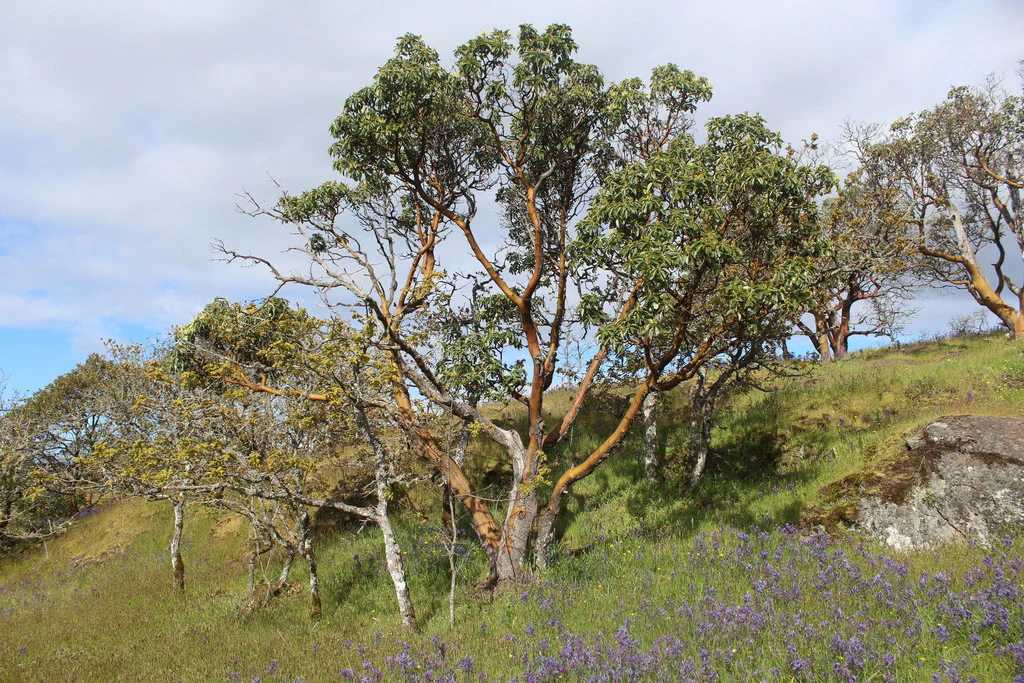
Pacific madrone is arguably one of our most captivating and recognizable native trees. The trunk and branches showcase patterns of exfoliating copper bark, exposing smooth olive to red wood beneath that is lusciously soft to the touch. It is endemic to the Pacific Northwest, west of the Cascades - meaning this is the only place in the world that it naturally grows. Clusters of creamy white, fragrant urn-shaped flowers adorn the branches in spring and mature into bumpy orange-red fruits that persist until winter and provide striking contrast to the evergreen foliage and are attractive to many species of birds.
- Plant type/canopy layer: evergreen, perennial, large tree
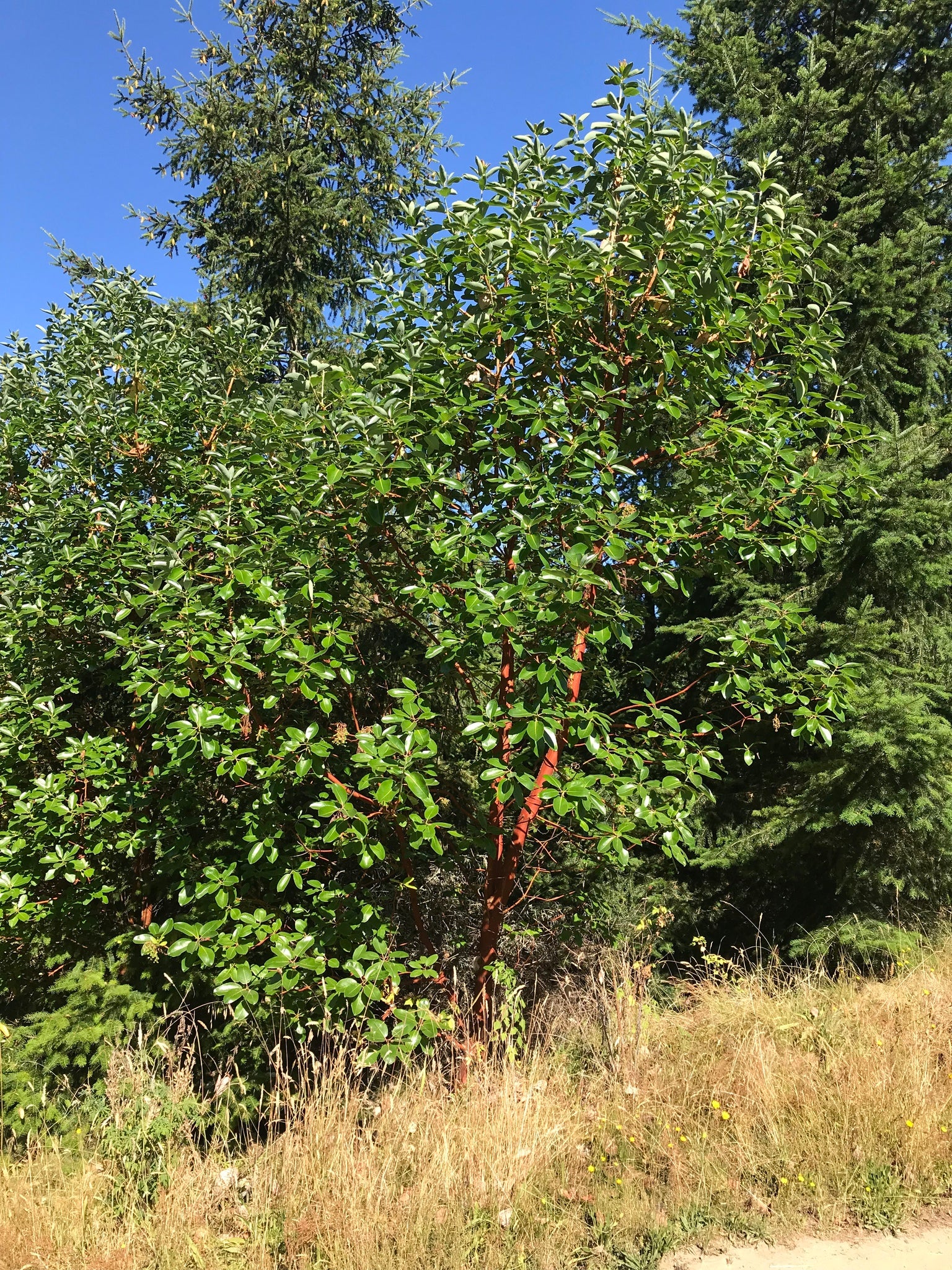
- Size at maturity: usually 20’ - 50’ tall, 20’ - 40’ wide
- Light requirements: full sun, part-sun/part-shade
- Moisture requirements: dry, well-drained soil
- Bloom time: April - May
- Growth rate/ease: very slow growth rate, difficult to grow
- Wildlife support: flowers provide nectar for hummingbirds, native bees, and other pollinators; berries feed many bird and mammal species, including American robins, varied thrushes, band-tailed pigeons, cedar waxwings, northern flickers, quail, raccoons, squirrels, mule deer, and bears; overall plant is a caterpillar host and larval food source for native butterflies and moths
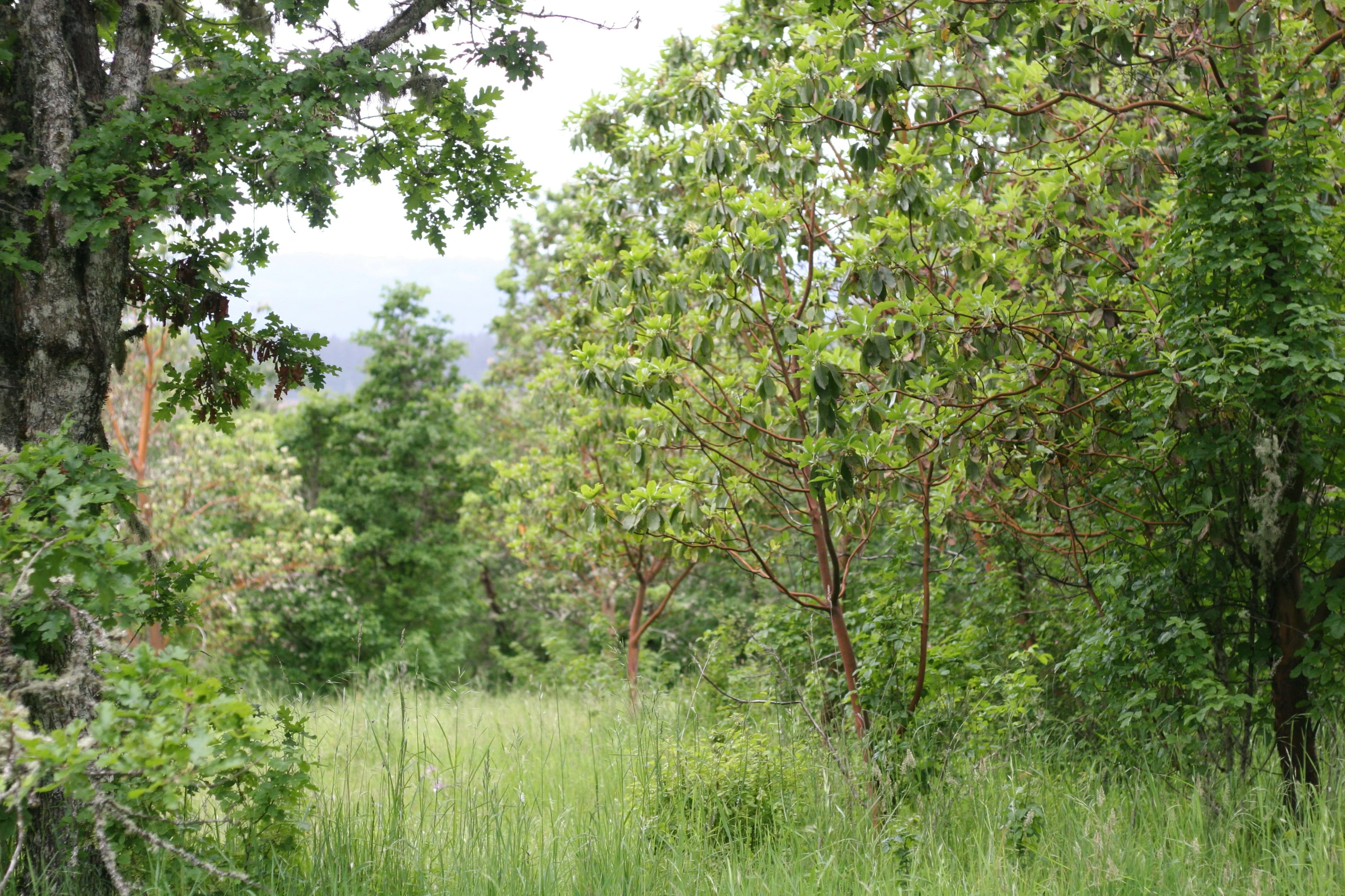
- Native habitat/range: grows in coniferous and mixed forests and rocky meadows, up to 1600m, throughout that Cascade, Coast, and Siskiyou ranges, the Willamette Valley as well as parts of California, Washington and British Columbia. Portland Plant List - yes.
- Special features & uses: evergreen; drought-tolerant; wildlife favorite; edible; traditionally berries can be used to make cider and a tea that can ease colds and sore throats, leaves can be chewed to reduce stomach cramping, both leaves and bark can be used in topical infusions as a dermatological aid (burns, cuts, scrapes); landscape uses include erosion control, habitat hedgerows, and windbreaks
Gardening with Pacific Madrone: Madrone is difficult to establish and slow growing. But resist the temptation to plant an older or bigger specimen because the small, new plants we offer are most likely to survive. It prefers sun and acidic, well-drained soils and is entirely intolerant of wet soils. Plant it very carefully in fall (or early spring), then leave it alone. Its roots are extremely sensitive to drainage changes, compaction, grade alteration, and other soil disturbance. Older trees are exceptionally drought-tolerant.
Eileen Stark provides a phenomenal in-depth description of Pacific Madrone on her blog HERE. Check it out!
Photo Credit 1 (bark): © Joseph Rojas, some rights reserved (CC-BY)
Photo Credit 2 & 7 (flowers close, full form in flower): © Harry Podschwit, some rights reserved (CC-BY)
Photo Credit 3 (flower super close): © Logan J.L. Bradley, some rights reserved (CC-BY)
Photo Credit 4 & 9 (leaves/branches, in the wild): Karli Del Biondo, Beatles and Bees
Photo Credit 5 & 10 (early fruits, young form): © John Leszczynski, some rights reserved (CC-BY)
Photo Credit 6 (leaves and fruits): "Arbutus menziesii" by briweldon is licensed under CC BY 2.0.
Photo Credit 8 (red fruits): © Dan Rademacher, some rights reserved (CC-BY)
Photo Credit 11 (riverside pair): © John Brew, some rights reserved (CC-BY)
Photo Credit 12 (mature form): © Lindsey K. Wise, some rights reserved (CC-BY)
Photo Credit 13 (mature form in savanna): © Michelle N., some rights reserved (CC-BY)
Details & Craftsmanship
Every detail has been carefully considered to bring you the perfect product.
Details & Craftsmanship
Every detail has been carefully considered to bring you the perfect product.
Details & Craftsmanship
Every detail has been carefully considered to bring you the perfect product.
Details & Craftsmanship
Every detail has been carefully considered to bring you the perfect product.
Details & Craftsmanship
Every detail has been carefully considered to bring you the perfect product.
Details & Craftsmanship
Every detail has been carefully considered to bring you the perfect product.
Details & Craftsmanship
Every detail has been carefully considered to bring you the perfect product.
Details & Craftsmanship
Every detail has been carefully considered to bring you the perfect product.
Details & Craftsmanship
Every detail has been carefully considered to bring you the perfect product.
Details & Craftsmanship
Every detail has been carefully considered to bring you the perfect product.
Details & Craftsmanship
Every detail has been carefully considered to bring you the perfect product.
Details & Craftsmanship
Every detail has been carefully considered to bring you the perfect product.
Description
Arbutus menziesii
Pacific madrone is arguably one of our most captivating and recognizable native trees. The trunk and branches showcase patterns of exfoliating copper bark, exposing smooth olive to red wood beneath that is lusciously soft to the touch. It is endemic to the Pacific Northwest, west of the Cascades - meaning this is the only place in the world that it naturally grows. Clusters of creamy white, fragrant urn-shaped flowers adorn the branches in spring and mature into bumpy orange-red fruits that persist until winter and provide striking contrast to the evergreen foliage and are attractive to many species of birds.
- Plant type/canopy layer: evergreen, perennial, large tree
- Size at maturity: usually 20’ - 50’ tall, 20’ - 40’ wide
- Light requirements: full sun, part-sun/part-shade
- Moisture requirements: dry, well-drained soil
- Bloom time: April - May
- Growth rate/ease: very slow growth rate, difficult to grow
- Wildlife support: flowers provide nectar for hummingbirds, native bees, and other pollinators; berries feed many bird and mammal species, including American robins, varied thrushes, band-tailed pigeons, cedar waxwings, northern flickers, quail, raccoons, squirrels, mule deer, and bears; overall plant is a caterpillar host and larval food source for native butterflies and moths
- Native habitat/range: grows in coniferous and mixed forests and rocky meadows, up to 1600m, throughout that Cascade, Coast, and Siskiyou ranges, the Willamette Valley as well as parts of California, Washington and British Columbia. Portland Plant List - yes.
- Special features & uses: evergreen; drought-tolerant; wildlife favorite; edible; traditionally berries can be used to make cider and a tea that can ease colds and sore throats, leaves can be chewed to reduce stomach cramping, both leaves and bark can be used in topical infusions as a dermatological aid (burns, cuts, scrapes); landscape uses include erosion control, habitat hedgerows, and windbreaks
Gardening with Pacific Madrone: Madrone is difficult to establish and slow growing. But resist the temptation to plant an older or bigger specimen because the small, new plants we offer are most likely to survive. It prefers sun and acidic, well-drained soils and is entirely intolerant of wet soils. Plant it very carefully in fall (or early spring), then leave it alone. Its roots are extremely sensitive to drainage changes, compaction, grade alteration, and other soil disturbance. Older trees are exceptionally drought-tolerant.
Eileen Stark provides a phenomenal in-depth description of Pacific Madrone on her blog HERE. Check it out!
Photo Credit 1 (bark): © Joseph Rojas, some rights reserved (CC-BY)
Photo Credit 2 & 7 (flowers close, full form in flower): © Harry Podschwit, some rights reserved (CC-BY)
Photo Credit 3 (flower super close): © Logan J.L. Bradley, some rights reserved (CC-BY)
Photo Credit 4 & 9 (leaves/branches, in the wild): Karli Del Biondo, Beatles and Bees
Photo Credit 5 & 10 (early fruits, young form): © John Leszczynski, some rights reserved (CC-BY)
Photo Credit 6 (leaves and fruits): "Arbutus menziesii" by briweldon is licensed under CC BY 2.0.
Photo Credit 8 (red fruits): © Dan Rademacher, some rights reserved (CC-BY)
Photo Credit 11 (riverside pair): © John Brew, some rights reserved (CC-BY)
Photo Credit 12 (mature form): © Lindsey K. Wise, some rights reserved (CC-BY)
Photo Credit 13 (mature form in savanna): © Michelle N., some rights reserved (CC-BY)